The Complete Guide to Fine Wine Provenance
Provenance is the most used and least understood word in fine wine. It is printed on auction catalogues, promised in listings, and rarely explained. This guide sets out what provenance actually is, how to read it, and why — for a serious bottle — it matters more than the label, the score, or the price.
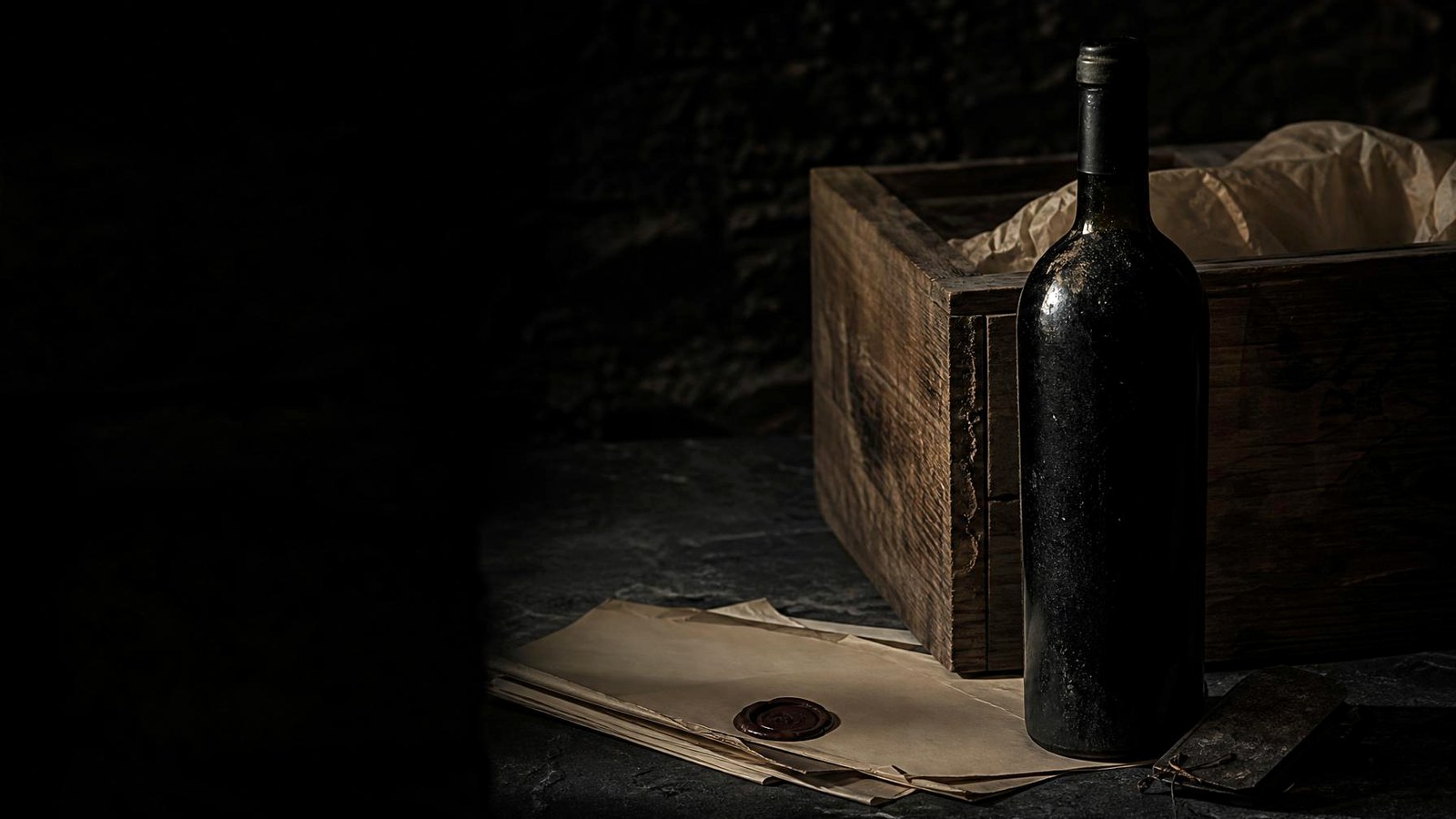
What provenance actually means
Provenance is the documented history of a bottle: where it came from, who has owned it, and — most importantly — how it has been kept. It is not a single document or a certificate. It is a chain, an unbroken account that connects the wine in your glass back to the estate that made it.
The distinction matters because the two are often confused. A certificate of authenticity tells you someone believes a bottle is genuine. Provenance tells you why that belief is justified: the storage conditions it has passed through, the hands it has changed, the gaps in its history if any exist. A bottle can have a certificate and poor provenance. The certificate is a claim; the provenance is the evidence behind it.
For young wines bought on release, provenance is simple and short. For older and rarer bottles — the ones where money and risk concentrate — provenance becomes the single most important factor in both value and drinkability.
It helps to separate three things that are often blurred: authenticity, condition, and provenance. Authenticity asks whether the bottle is genuinely what its label claims. Condition asks whether the wine inside is still sound. Provenance is the thread that connects them — the documented history that explains why you can trust both. A bottle can be authentic yet poorly kept, or well kept yet impossible to verify. Provenance is what lets the two questions be answered together rather than guessed at separately.
A certificate is a claim. Provenance is the evidence behind it.
Why it matters more than the label
A wine's label tells you what it claims to be. Its provenance tells you whether that claim can be trusted, and whether the wine inside is still worth drinking. These are different questions, and the second is harder.
Fine wine is fragile. Heat, light, movement and time all act on a bottle, and none of them leave a mark on the label. Two bottles of the same vintage can be worlds apart in condition depending only on how they were stored. The label cannot tell you which is which. The provenance can.
This is also why counterfeiters focus on labels and capsules — the things you can see — and why experienced buyers focus on the things you cannot: the fill level, the storage history, the chain of custody. A perfect label on a bottle with no history is more suspicious, not less.
Consider two bottles of the same grand cru and vintage, identical on the shelf. One has rested in a single bonded warehouse since release, at a steady cellar temperature, never handled. The other changed hands four times, spent a decade in a dining room, and travelled twice in summer. The labels are the same. The wines are not. Only the provenance distinguishes them, and that distinction is the difference between a bottle worth its price and one worth far less.
How to read provenance before buying
Start with the fill level, or ullage — the height of the wine in the bottle. For an aged wine, the fill should match the vintage. Too low suggests a failing cork or heat damage; suspiciously high for the age can suggest the bottle is not what it claims. The bottle should agree with its own age.
Next, ask about custody. Where has the bottle lived since release? A bottle held in professional bonded storage has a short, clean, verifiable history. One that has passed through several private cellars has a longer story with more opportunities to break. Ask not just who owns it, but who has kept it, and under what conditions.
Where the original wooden case survives, treat it as evidence. A case keeps bottles together so their details can be compared — fills, labels and capsules from the same case should share a life. When they disagree, that disagreement is information worth understanding before you buy.
It also helps to ask the seller direct questions and listen to how they answer. A serious source can tell you where a bottle has been stored, how long they have held it, and how it came to them. Vagueness is itself a signal: if the history cannot be described, it cannot be verified. The best answers are specific and unglamorous — a warehouse name, a release date, a clean and boring custody record.
A provenance checklist before buying
Before committing to a serious bottle, a few questions settle most of the doubt. None is decisive alone; together they tell you whether a history can be trusted.
- Does the fill level match the bottle's age?
- Has the wine remained in professional storage, or are there private-cellar periods that need explaining?
- Is there a named source — an estate, merchant, auction lot, or bonded warehouse record?
- Has the bottle moved physically, or only changed ownership on paper?
- If relevant, does the original wooden case survive?
- Do label, capsule, cork and fill agree with the vintage?
- Is the price too low for the history offered?
A bottle that answers most of these cleanly is one whose story holds. A bottle that cannot is not necessarily wrong — but it is asking you to believe what should be shown.
What paperwork can — and cannot — prove
Not all paperwork is equal. Some documents genuinely strengthen a bottle's history; others give only the appearance of doing so.
What strengthens a history: an original purchase invoice; a release, allocation, or merchant record close to source; a bonded warehouse account showing continuous storage; an auction condition report; the original wooden case, where relevant; and records of any transfer between storage facilities.
What adds little: a generic certificate with no chain behind it; a seller's claim of "excellent condition" with no storage history; a bottle described only as from a "private cellar" with no further context. These are not red flags in themselves, but they prove less than they appear to. A document is only as strong as the continuity it can demonstrate.
Custody: the part most people miss
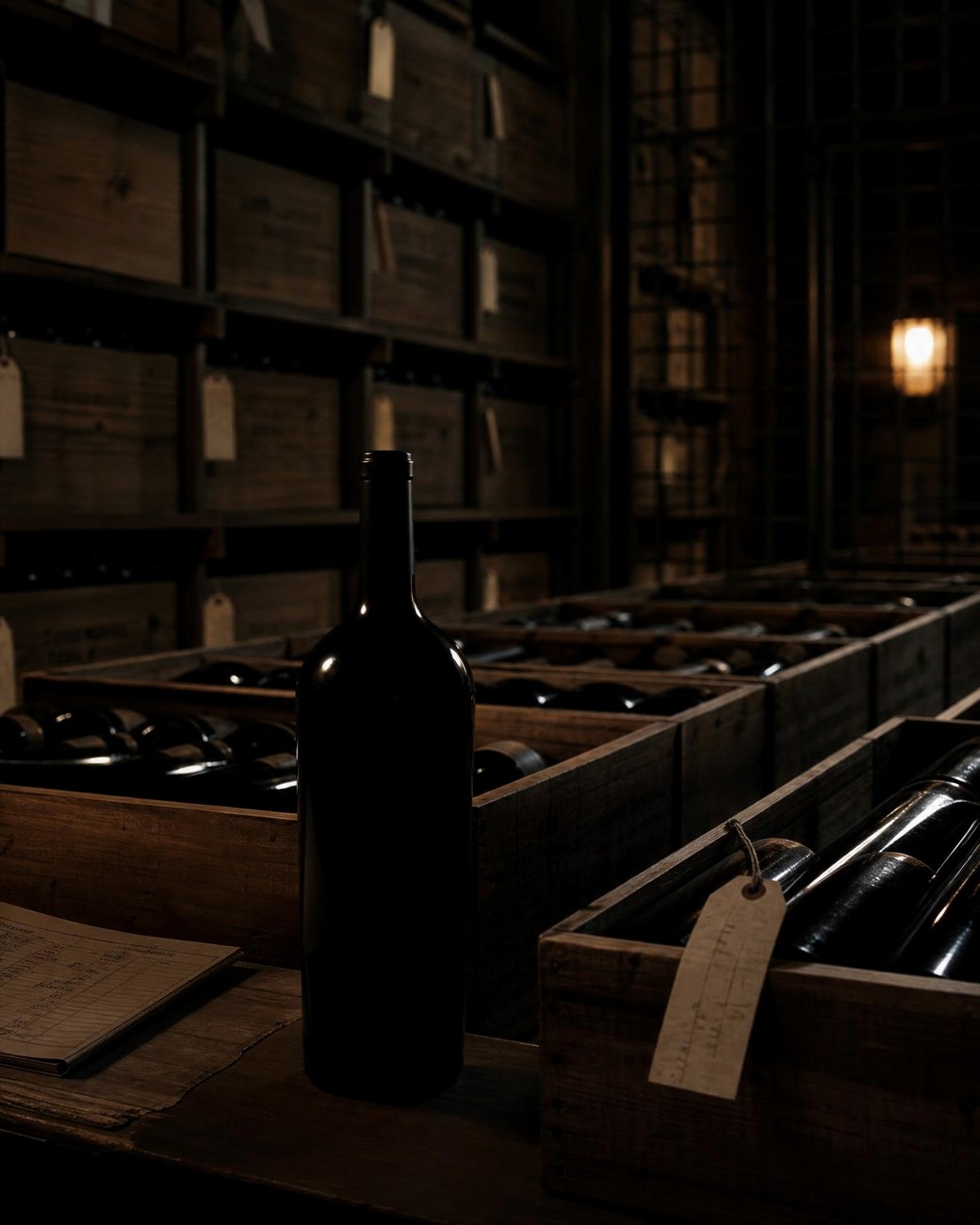
Custody is the quiet centre of provenance, and the part buyers most often overlook in favour of paperwork. A chain of custody is the record of continuous, professional care — ideally a bottle that has never left controlled storage from release until the moment it reaches you.
The strength of an unbroken chain is that it removes the usual weak points. A bottle that never moves is never exposed to heat in transit, never handled carelessly, never stored in a warm dining room for a decade. Each transfer of ownership can happen on paper while the bottle stays exactly where it is kept properly.
This is why so much serious wine now changes hands in bond, without moving at all. The chain is not paperwork. It is the bottle never leaving controlled storage.
Transit is the most underrated risk in a bottle's life. Wine is most vulnerable when it moves: loaded, stored in non-climate-controlled spaces, left on a warm dock, driven across a country in summer. Each journey is an opportunity for heat and movement to do quiet damage that never shows on the label. An unbroken chain of professional custody matters precisely because it removes these journeys — the bottle stays still while only ownership changes.
The chain is not paperwork. It is the bottle never leaving controlled storage.
Red flags and broken chains
Some warning signs are worth knowing. A history that is suspiciously clean — a rare old bottle with no account of where it has been for decades — deserves more scepticism than one with an ordinary, followable past. Counterfeits often come with no story precisely because a story can be checked.
Other flags: a fill level that does not match the vintage, capsules or labels that look too fresh for the wine's age, a seller who cannot or will not describe storage conditions, and prices well below market for a bottle whose provenance is vague. None of these is proof of a problem on its own. Together, they are a reason to slow down.
A broken chain cannot be repaired after the fact. Once a bottle has spent unknown years in unknown conditions, no certificate issued later can restore the certainty that was lost. This is why provenance is built forward, from the moment of release, not reconstructed backward.
Where bonded storage fits in
Bonded storage is a customs-regulated warehouse where wine is held with duty and tax suspended. Beyond the tax treatment, it provides something provenance depends on: consistent, professional, documented conditions, with every movement logged.
A bottle held in professional bonded storage since release usually carries one of the cleanest custody records available. Temperature is controlled and stable, the bottle is not handled, and ownership can transfer without the wine ever moving. For a collector, this is the difference between a bottle whose history you can follow and one you must take on faith.
Provenance at auction and in the secondary market
Most rare wine changes hands more than once, and the secondary market — auctions, brokers, private sales — is where provenance is tested hardest. At a serious auction house, a lot's history is part of what is sold: where the wine came from, how it was stored, and whether it arrived directly from a known cellar or through several intermediaries. A bottle sold "ex-château" or direct from a producer's own cellar carries the cleanest story available. One assembled from mixed sources carries more uncertainty, and should be priced accordingly.
This is why condition reports and storage history matter as much as the label in any secondary sale. A careful buyer reads the catalogue description as closely as the price: the wording around storage, the number of previous owners, and whether the seller stands behind the bottle's condition. Silence on these points is not neutral. In a market where the wine itself cannot be opened before purchase, the documented history is the only thing standing between a buyer and a costly mistake.
How provenance affects value
Provenance does not merely protect a bottle; it prices it. Two otherwise identical wines can differ substantially in value based on storage history alone, and the gap widens as bottles age and rarity increases. For the most sought wines, impeccable provenance can command a clear premium, while a broken or unverifiable history applies a discount that no amount of rarity fully erases. The market has learned this the hard way, through decades of counterfeits and heat-damaged bottles, and now rewards the boring certainty of a clean chain.
For a collector, this has a practical consequence: buying well-provenanced wine is rarely the cheapest option upfront, but it is usually the better one. A bottle bought with its history intact holds value, drinks as intended, and sells more easily later. A bargain bottle with a vague past may cost less today and far more in regret. Provenance, in other words, is not an expense added to the wine. It is part of what the wine is worth.
Building provenance forward
The most important thing to understand about provenance is that it can only be built forward, never reconstructed backward. Once a bottle has passed years in conditions no one recorded, no certificate issued afterward can restore the certainty that was lost. This is why the cleanest cellars are those that insist on provenance from the moment of acquisition: bottles bought on release or from impeccable sources, then held in professional storage without interruption, so the record grows rather than breaks.
For anyone starting to collect seriously, the lesson is to set the standard early. Buy bottles whose history you can follow, keep them where their custody stays documented, and resist the temptation of the cheap bottle with the unconvincing story. A collection built this way is worth more, drinks better, and is far easier to pass on — because every bottle in it can answer the only question that ultimately matters: where have you been, and how were you kept?
In short
Provenance is not a certificate; it is a chain. It matters more than the label because condition, not appearance, determines what a fine wine is worth and whether it is still worth drinking. You read it through the fill level, the custody, and the small details that should agree.
The safest bottles are the boring ones: held in professional storage since release, with an unbroken record and nothing dramatic to explain. At the highest level, provenance is simply the discipline of keeping context intact — and it is the whole of the value.
The Empty Drops view
Here, provenance is treated as part of the bottle, not as a note attached to it. A rare wine without context is incomplete. The label may name the estate; the chain decides whether the bottle can still be trusted.
No serious bottle should be described by name alone. The quietest bottles — those with the least to explain — often say the most to a careful collector.
The provenance checklist
Before buying any rare bottle, these are the questions whose answers should exist on paper — not in the seller's confidence. Where an answer is missing, the price should reflect the missing evidence.
Bottle identity
- Do label, capsule, cork branding (if visible) and glass markings all agree on producer, cuvée, vintage and format?
- Does the bottle match the producer's known packaging for that vintage — label stock, printing, lot codes?
- For large formats: was this format actually bottled by the producer in that vintage, and in what quantity?
Storage history
- Has the bottle been in professional, temperature-controlled storage — and since when?
- Can the seller name the warehouse(s), or is "properly stored" doing all the work?
- Any period of domestic storage, transit gaps, or climates the seller cannot account for?
Chain of custody
- How many owners since release, and can each transfer be evidenced — invoices, warehouse transfer records, auction lots?
- Is the origin ex-cellar, en primeur into bond, or an undocumented secondary purchase?
- Does the seller's story stay identical when you ask twice?
Condition
- Is the fill level appropriate for the wine's age?
- Is the capsule original and intact — no seepage, spinning or re-seating?
- Label condition consistent with the claimed storage (a pristine label on a "cellared 30 years" bottle is a question, not a comfort)?
Release channel
- Is the transaction happening in-bond, warehouse-to-warehouse — or does the bottle leave professional custody to reach you?
- Is the platform or intermediary one that verifies stock physically, or a listing board?
The checklist, compressed into a number: the 20-point provenance scorecard turns these questions into a score you can put next to the price.
Use the scorecardCommon questions
What is provenance in fine wine?
Provenance is the documented history of a bottle — where it came from, who has owned it, and how it has been stored. It is a continuous chain of custody rather than a single certificate, and for rare bottles it is the most important factor in both value and condition.
How do you verify wine provenance?
You read the fill level against the vintage, ask where and how the bottle has been stored since release, look for an unbroken chain of professional custody, and treat the original case as evidence. A clean, followable history matters more than any certificate.
Why does provenance matter more than the label?
The label states what a wine claims to be; provenance shows whether that claim is trustworthy and whether the wine is still in good condition. Heat, light and poor storage damage wine without leaving any mark on the label, so only the storage history reveals the truth.
Is bonded storage important for provenance?
Yes. A bottle held in bonded storage since release usually carries one of the cleanest custody records available — stable conditions, logged movements, and the ability to change ownership without the bottle ever moving, which removes the usual risks of heat, handling and broken records.
Does provenance affect a wine's value?
Yes, significantly. Two otherwise identical bottles can differ in value based on storage history alone, and the gap grows with age and rarity. Impeccable provenance commands a premium, while a broken or unverifiable history applies a discount that rarity cannot fully erase.
How is provenance handled at wine auctions?
At a serious auction, a lot's history is part of what is sold — where the wine came from, how it was stored, and how many hands it passed through. Bottles sold direct from a producer or a known cellar carry the cleanest story; read condition reports and storage notes as closely as the price.
The Empty Drops is a private cellar where provenance is treated as evidence, not decoration.
How this cellar is kept →