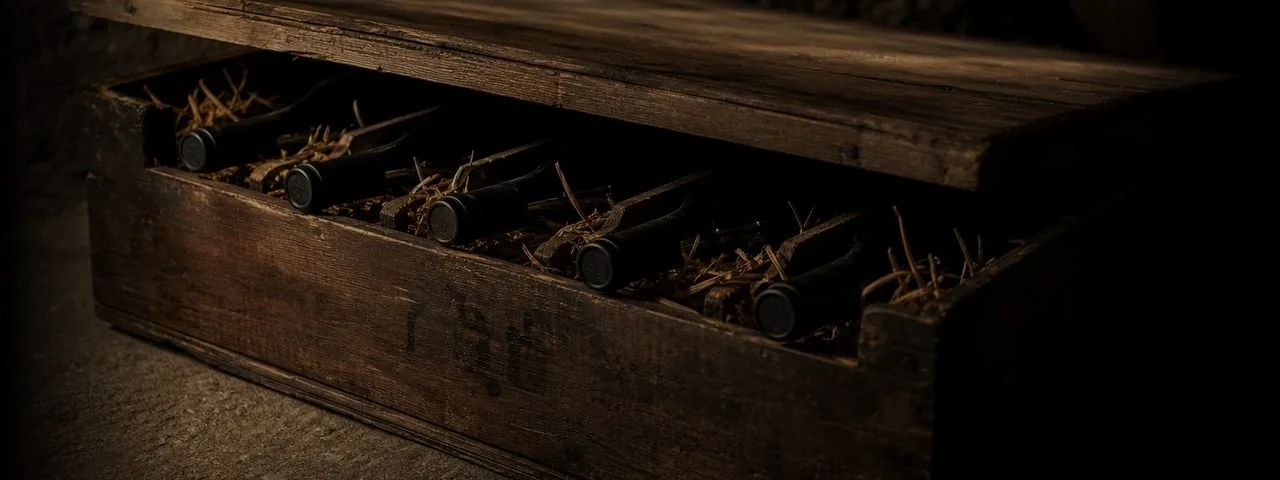
The case as evidence
A wooden case is often treated as packaging, but in a serious cellar it is closer to testimony. It holds the bottles together long enough for their small agreements, or disagreements, to become visible.
A single bottle can persuade. A case can corroborate. This is why the original case matters in serious collecting, not as theatre, but as evidence. The wood, the dividers, the paper, the way the bottles sit beside one another — all of it preserves context that is lost when bottles are separated, handled, photographed, moved, and explained one by one.
A case kept whole allows comparison. The fills should speak in the same register. The labels should have aged under the same air. Capsules should show a shared life rather than six or twelve separate histories brought together later.
None of this proves everything, and it should never be asked to. A case can be opened. Bottles can be replaced. Wood can travel farther than wine. But when the small details agree, they make a kind of quiet argument that no single bottle can make alone.
This is the part often missed by those who look only at the label. The case is not valuable because it is old wood, or because it photographs well. It is valuable because it keeps witnesses together. A bottle without its neighbours must tell its story alone; a bottle still held among them is part of a pattern.
At the highest level, provenance is not only a document. It is the discipline of keeping context intact.