Where wine should be kept, and why
Wine does not need a perfect cellar so much as a consistent one. The enemy is not warmth or cold in themselves, but change — the swing back and forth that ages a bottle before its time.
Ask what temperature wine should be stored at and you will get a number — around 12 to 14 degrees. The number is fine, but it is not the point. The point is stability. A bottle kept steadily at sixteen degrees will often outlast one that swings between ten and eighteen with the seasons. Wine ages by slow exchange, and what ruins it is not heat alone but movement, expansion and contraction working the cork loose over years.
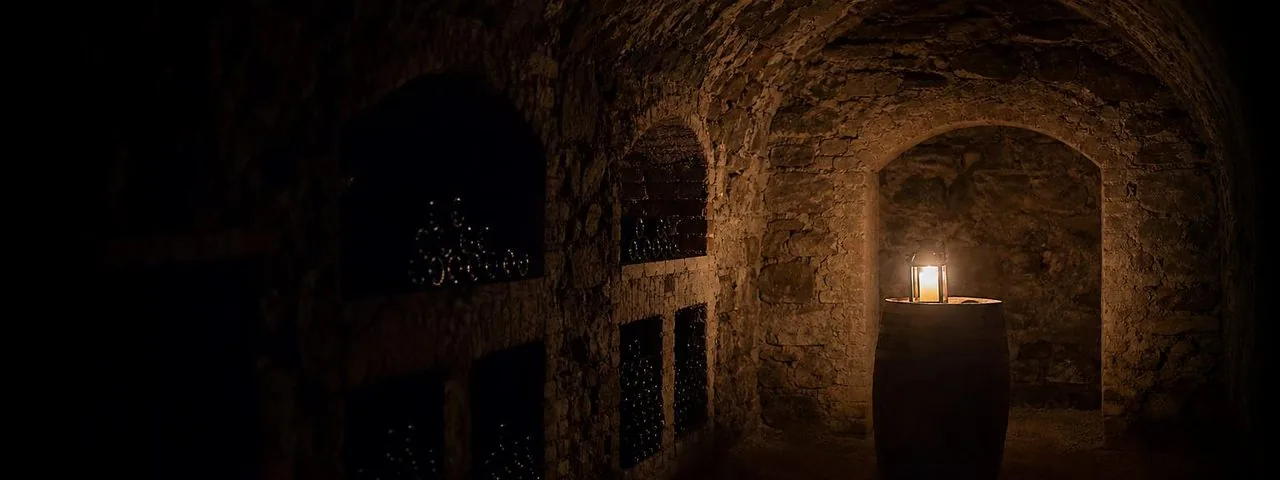
Darkness matters more than people expect. Light reaches through glass and tires the wine quietly, with no visible sign until the bottle is opened. A serious storage space is a dark one, deliberately — not for secrecy, but because the wine should never be asked to perform before it is poured.
Humidity keeps the cork supple, so it seals rather than shrinks; too little and the cork dries, too much and labels suffer and mould appears. Stillness matters too: a bottle that is handled, shifted and re-shelved is disturbed each time. The best-kept bottles are the least touched.
All of this is why so much serious wine is held in professional storage rather than at home. Not because a home cannot be made suitable, but because consistency over years is hard to guarantee in a place that is also lived in. A cellar's real luxury is that nothing in it changes.
If you keep wine yourself, aim less for perfection and more for steadiness: cool, dark, still, and the same all year. A bottle does not ask for much. It asks for the same thing, for a long time.