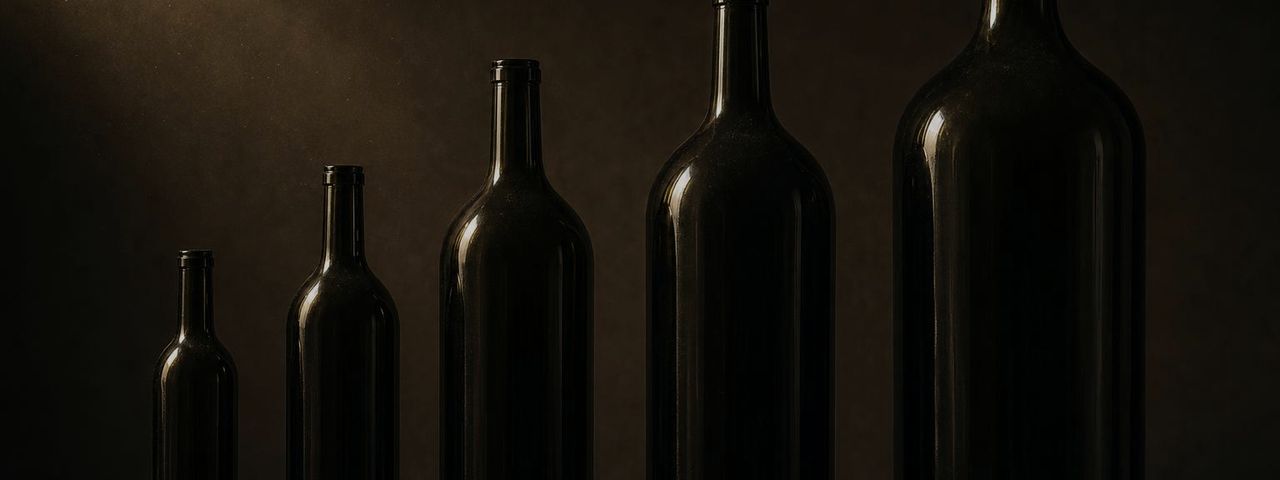
Why the magnum, and why the three-litre is the trophy
A wine does not age by the bottle — it ages by the ratio of wine to air. The larger the format, the slower and finer that exchange. Size is not vanity here. It is time, bought in advance.
The standard 0.75 is the unit of drinking. The 1.5-litre magnum is the unit of keeping: less air per volume of wine, a slower curve, a longer life — the format serious cellars reach for when a vintage deserves to outlast its maker. And then there is the three-litre. The double magnum is rare before it is even filled; producers make a handful, number them by hand, and most never leave the estate intact. To hold one is to hold a wine in its most patient form and its scarcest — the bottle that ages most gracefully, made in the smallest count. Among rare bottles it is the quiet trophy: not the loudest label, but the one that is hardest to ever assemble again. A cellar is measured less by what it pours than by what it has been able to keep whole. The large formats are how that is proven.