The Empty Drops

Producers · Neive, Piedmont · MMXXVI

Bruno Giacosa

Nebbiolo chosen by the strictest palate Piedmont has known. Falletto, Asili, Valmaggiore — and a red label that appears only when the year deserves it. Several of these bottles are kept here, in bond.

Nebbiolo · Barolo & Barbaresco · Riserva discipline · Kept in bond

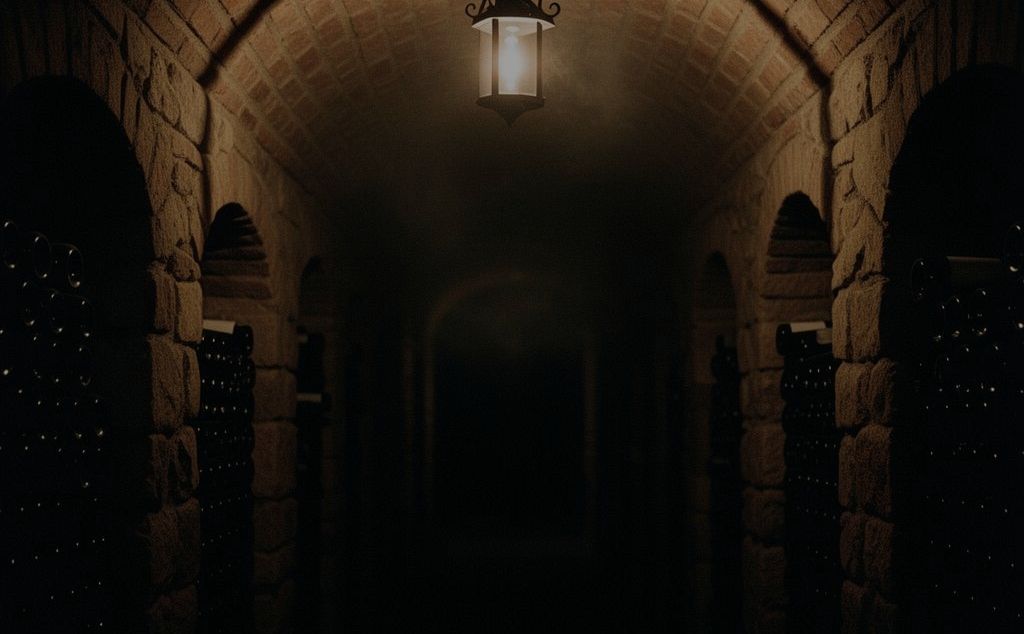
A dark stone cellar tunnel in low light — atmosphere, not inventory.
Kept in the dark · atmosphere, not inventory

The producer

Selection as a philosophy.

Before he owned a single vine, he knew which rows mattered.

Bruno Giacosa (1929–2018), the "Genius of Neive," began as his father Mario and grandfather Carlo had — buying fruit across the Langhe as a négociant from the family cellar in Neive, which he entered at thirteen and where he worked full-time from fifteen, his schooling cut short by the war. He learned the craft not in an enology school but by walking the hills, and above all by selection: which parcels, in which years, gave Nebbiolo worth waiting for. By the 1960s that palate had made him one of the three names that defined modern Barbaresco, alongside Gaja and the Produttori.

In 1964 he bottled a single-vineyard Barbaresco, Santo Stefano di Neive — among the first cru bottlings in the Langhe, made from fruit he did not own but understood better than most owners did. For three decades his greatest wines came from rented and purchased rows: the heroic Collina Rionda of Serralunga (1967–1993) still ranks among the finest Barolos ever made. Only in 1982 did he buy land of his own — Falletto in Serralunga — followed in 1996 by parcels in Asili and Rabajà, the two crus he judged the greatest of Barbaresco. He chose the sites he had spent a lifetime studying.

The winemaking has always been classical and unhurried: a two-to-three-week fermentation, long ageing in large French-oak botti, nothing added for effect, wines released when they are ready to be understood. Fruit that failed his standard was sold off in bulk rather than bottled — and twice the standard refused an entire top tier: no 2006 Barolo or Barbaresco was released, a decision announced in 2009 to public uproar, and in 2013 the house declined to bottle its finest 2010 reds. Both were years most of the region considered good. The house is led today by his daughter Bruna Giacosa, with cellar-master Francesco Versio and Bruno's longtime protégé Dante Scaglione as consultant — the same discipline, unbroken.

For a collector, Giacosa is one of the few names where the producer's own restraint does part of the cellar's work. Not every wine is made every year. Not every year earns the red label. What reaches the bottle has already been judged once — severely.


The labels

White, and red.

The Riserva is a decision about the year — not a tier in a range.

The white label

The classic bottling

The house's standard is already unforgiving: fruit from great sites, long ageing, release without haste. In most cellars this would be the summit. Here it is the baseline.

The red label

Riserva · only when the year deserves it

Released only in vintages Giacosa judged exceptional — sometimes with years of silence in between. The red label is the producer saying, in his own hand, that this year mattered. It is why Riserva bottlings anchor serious Piedmont collections.


The sites

The man
Bruno Giacosa (1929–2018), born in Neive, in the Barbaresco zone. He began working in the family cellar at thirteen alongside his father Mario and grandfather Carlo — the third generation — and learned to read fruit by selection rather than in enology school. Widely regarded as one of the greatest winemakers of his era, for both Barolo and Barbaresco, and given an honorary degree by the University of Gastronomic Sciences of Bra in 2012.
Négociant first
For decades he owned no vines, buying fruit from the finest sites. In 1964 he bottled Barbaresco Santo Stefano di Neive — among the first single-vineyard crus in the Langhe — and made legends from purchased fruit, above all the Collina Rionda Barolos of Serralunga (1967–1993). Santo Stefano was made through 2011, when the house turned to estate fruit for its top wines.
Two houses
From 1982 he acquired his own vines — most famously the Falletto monopole in Serralunga d'Alba, followed in 1996 by Asili and a small (about 0.5 ha) parcel of Rabajà in Barbaresco. Since the 1996 vintage the estate splits in two: Azienda Agricola Falletto for estate-grown fruit, Casa Vinicola Bruno Giacosa for bought grapes.
The red label
His Riserva bottlings carry a red label, used only in vintages he judged truly exceptional — a few times a decade. When it appeared, it signalled a wine of extra dimension, built for decades. His more usual white-label wines were themselves of such quality that collectors often wondered why they lacked the red. Fruit that fell short was sold off in bulk rather than bottled.
The sites
Falletto (Serralunga), about 13 hectares of limestone and clay, for the most structured Barolos — its upper south-facing parcel, Le Rocche del Falletto, singled out by Bruno in 1997; Asili (Barbaresco), calcareous clay, for aromatic, elegant Nebbiolo; Rabajà for body and depth; and Valmaggiore, a steep sand cru in the Roero worked on a long-term lease, for Nebbiolo d'Alba. The estate today farms around 20 hectares and makes some 400,000 bottles a year.
Today
Since Bruno's death in 2018, the estate is led by his daughter Bruna, with cellar-master Francesco Versio and Bruno's longtime protégé Dante Scaglione as consultant — upholding the traditional style.

Drawn from the accounts of Rare Wine Co., Sotheby's, Decanter, Kerin O'Keefe, Wine-Searcher and Folio Fine Wine Partners. The estate: brunogiacosa.it. Record updated .

Three hills.

Serralunga's spine, Barbaresco's grace, Roero's sand.

Barolo · estate cru

Falletto — Vigna Le Rocche

Serralunga d'Alba

The estate's heart since 1982, and Le Rocche its finest section — the steep amphitheatre where Serralunga's structure meets unexpected perfume. In Riserva form, this is the reference Barolo of the house. This cellar records it in both standard bottle and three-litre format — and a wine built on decades ages differently again when the format slows time further.

Barbaresco · estate cru

Asili

Barbaresco

If Falletto is the spine, Asili is the voice — the most graceful of Barbaresco's great crus, all lift and length. The Riserva from this site is among the rarest expressions the house makes.

Nebbiolo d'Alba · single vineyard

Vigna Valmaggiore

Vezza d'Alba · Roero

Across the river in the Roero's sand, a steep single vineyard that gives Nebbiolo of early perfume and quiet persistence. The unassuming door into the house's style — chosen with the same palate as everything above it.


Legendary vintages

The years the red label remembers.

A collector's map of Giacosa's peaks — not for sale here, but the measure against which everything is read.

1964First cru

Barbaresco Santo Stefano

The first single-vineyard Barbaresco Giacosa ever bottled, and among the first crus in the Langhe — the wine that began his lifelong argument for site.

1978Red label

Barolo Collina Rionda Riserva Speciale

Widely held to be one of the greatest Italian wines ever made — the benchmark by which his Serralunga Barolos are still judged.

1989Red label

Barolo Collina Rionda & Falletto Riserva

For many critics the summit of the modern era: the 1989 Rionda called his masterpiece, all silk, violet and tar, still fresh decades on.

1990Red label

Barolo & Barbaresco Riserva

The consistent twin to 1989, gorgeous from top to bottom — sweet cherry, rose and spice on a frame built for the very long haul.

2004Red label

Le Rocche del Falletto Riserva

A modern classic from the estate's finest parcel — firm, austere and precise, one of the reference reds of its decade.

2007Red label

Barbaresco Asili Riserva

Ninety-eight points from both Galloni and Suckling — flamboyant, exotically ripe and, in Galloni's word, "pure magic."

2016Red label

Barolo, Falletto Vigna Le Rocche Riserva

A hundred points from James Suckling — the second perfect score for Le Rocche, following the 2015 — and ninety-eight from the Wine Advocate. Drawn from the oldest vines in Falletto: structure and power where the 2015 had transparency.

Le Rocche Riserva, 0.75L →
2020Red label

Barbaresco Asili Riserva · Le Rocche Riserva

A year so clear in the vineyard that the decision to declare the red label was made in the rows rather than in the cellar — a rarity. Bruna Giacosa compares it to 2000 for its elegance.

Asili Riserva, 0.75L → Le Rocche Riserva, 3L →

Other benchmark years include 1971, 1982, 1990, 1996 and 2001. Le Rocche del Falletto has carried the red label in 2000, 2001, 2004, 2007, 2008, 2011, 2012, 2014, 2016, 2017 and 2020 — a decision taken only when the year earns it. Years marked in gold are recorded in this cellar.


Questions

Who was Bruno Giacosa?

Bruno Giacosa (1929–2018), known as the "Genius of Neive," was one of the defining figures of Barolo and Barbaresco. He built his reputation on an almost legendary ability to select fruit — first as a négociant, bottling one of the Langhe's first single-vineyard crus (Santo Stefano, 1964) and legends such as Collina Rionda from purchased grapes, later from estate vineyards including Falletto in Serralunga d'Alba and Asili in Barbaresco. The house is led today by his daughter Bruna, with cellar-master Francesco Versio and consultant Dante Scaglione.

What is the difference between the white and red labels?

The white label is the classic bottling. The red label — the Riserva — is released only when Giacosa judged the vintage exceptional, sometimes with years of silence between releases. It is a decision about the year, not a tier in a range, which is why Riserva bottlings sit at the centre of serious Piedmont collections.

Why does provenance matter so much for Giacosa Riservas?

Because a red-label Riserva is built to age for decades, most of its life is spent in storage — and everything a collector trusts about it depends on how those decades were kept. Fill level, capsule, label and an unbroken custody chain are the difference between a legendary bottle and a disappointing one. For wines this long-lived, provenance is not a detail; it is most of the value that survives the journey from Neive to the glass.

Which Bruno Giacosa bottles does The Empty Drops hold?

The recorded part includes Barolo Falletto Vigna Le Rocche Riserva in 3L (2020) and 0.75L (2016), Barbaresco Asili Riserva 2020, and Nebbiolo d'Alba Vigna Valmaggiore 2024 — all in professional bonded storage with documented custody. Most of the cellar is never listed.

Can I buy Bruno Giacosa from The Empty Drops?

Released bottles are handled through CruTrade, where condition, custody and terms stay transparent for both sides. Bottles recorded but not offered are held privately, though interest in a specific wine or vintage can be registered by private enquiry.